On this page
- Can a dermatologist do anything about hair loss?
- What does a hair loss dermatologist check at the visit?
- Why do I keep being told to wait?
- What treatments do Wichita dermatologists use for hair loss?
- Which Wichita dermatologists treat hair loss?
- How much does a hair loss dermatologist cost?
- What are some home remedies for hair fall?
- FAQs
The first sign is usually the shower drain. Or the hairbrush. Then the part looks wider in photos, and you start checking your scalp in every mirror.
A hair loss dermatologist is a skin doctor who diagnoses and treats problems of the scalp and hair, from thinning and shedding to bald patches. If you're looking for a hair loss dermatologist in Wichita, the most useful thing to know is what a proper visit should include.
Below, you'll find the common causes, what the dermatologist checks, the treatments they use, what it costs, and when to stop waiting and book.
Can a dermatologist do anything about hair loss?
Yes. A dermatologist diagnoses the cause of hair loss and treats it with prescription creams and pills, scalp injections, and in-office procedures. Treatment works best early, so seeing a hair loss dermatologist when thinning starts beats waiting until the patches are obvious.
Here's the thing: the right treatment depends completely on the cause. Minoxidil helps pattern thinning. It does nothing for a thyroid problem. That's why the visit starts with finding out why.
What causes hair loss?
| Type | What it looks like | Common trigger |
|---|---|---|
| Pattern hair loss (androgenetic alopecia) | Gradual thinning at the part (women) or the crown and hairline (men) | Genes and hormones |
| Telogen effluvium (shedding) | Lots of hair falling out all over, often in clumps | Childbirth, illness, stress, surgery, crash diets |
| Alopecia areata | Smooth, round bald patches | The immune system attacking hair follicles |
| Traction alopecia | Thinning at the hairline or where hair is pulled | Tight braids, ponytails, extensions |
| Scarring alopecia | Patches where the scalp looks shiny or red, sometimes itchy | Inflammation that destroys follicles |
Traction alopecia is common with tight styles on textured hair. For dermatologists experienced with Black and Brown hair and skin, see our skin of color dermatology guide.
What does a hair loss dermatologist check at the visit?
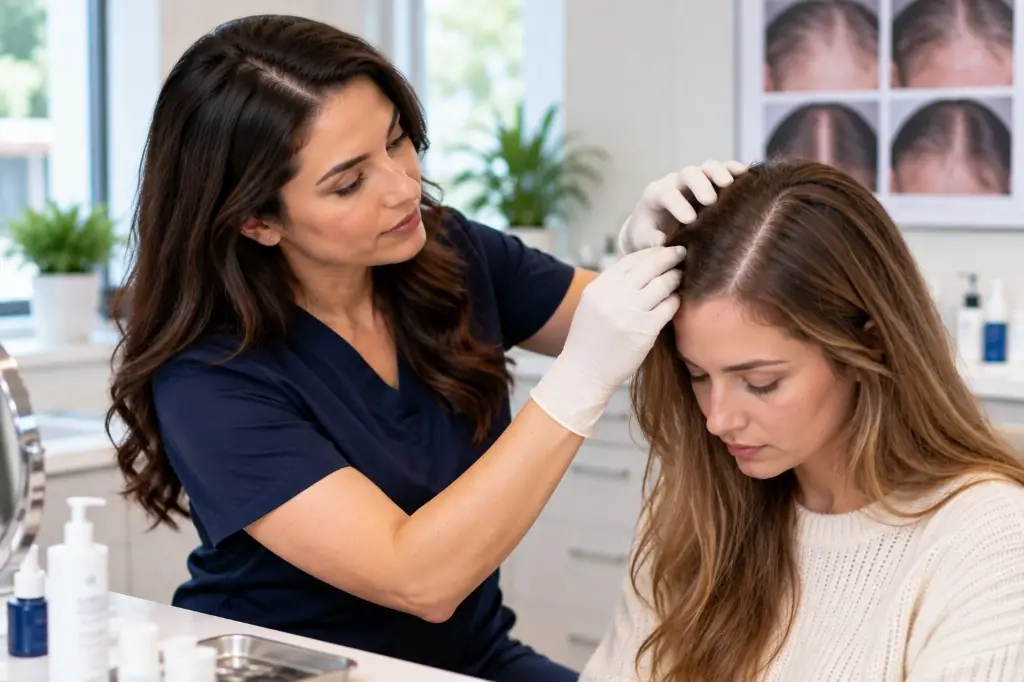
A good hair loss visit includes your history, a close look at your scalp with a magnifying scope, a gentle pull test, and often blood tests. If the cause isn't clear, the dermatologist takes a small scalp biopsy. You should leave knowing the likely cause.
A common complaint in online communities is feeling brushed off with a quick prescription. One Reddit thread, "Dermatologist that will take hair loss seriously," drew 20+ comments. Posters specifically ask for someone who "investigates causes rather than immediately prescribing," using a scalp exam, trichoscopy and testing.
So here's what a thorough workup looks like:
- History. When it started, recent childbirth, illness, stress, weight loss, medications, family history.
- Scalp exam. Where the hair is thinning and whether the scalp looks red, scaly or shiny.
- Trichoscopy. A handheld magnifier (dermatoscope) that shows follicles and hair shafts up close.
- Pull test. A gentle tug on a small bunch of hair to see how much comes out.
- Blood tests. Often thyroid and iron levels, plus hormone tests when a hormonal cause is suspected.
- Scalp biopsy (if needed). A small punch sample sent to the lab. Heartland Dermatology lists a punch biopsy at $194.25 and the lab reading at $59.34 (standard fees).
Pro Tip: Bring photos of your part or hairline from a year ago, and bring your hairbrush count if you've been tracking it. Photos show change better than memory does.
Should I see a dermatologist or an endocrinologist for hair loss?
Start with a hair loss dermatologist. Hair and scalp problems are their specialty, and they can order the hormone and thyroid tests. If those show a hormonal condition, the dermatologist refers you to an endocrinologist to treat it alongside your hair.
"Dermatologist or endocrinologist?" is a real question from the r/FemaleHairLoss community. The honest answer: the dermatologist figures out whether hormones are the cause. The endocrinologist treats the hormone problem if there is one.
Why do I keep being told to wait?
Doctors say "wait" because a lot of shedding, especially after childbirth or illness, settles on its own. But waiting has a limit. If shedding keeps going, bald patches appear, or your scalp is red or itchy, stop waiting and book a hair loss dermatologist.
One postpartum poster described still losing clumps at about 12 months after birth: "I fill my hairbrush every time I brush… cover my shower drain every time I shower." Their primary care doctor had told them to wait.
Book a hair loss dermatologist rather than waiting if:
- Shedding hasn't slowed after several months. Source pending
- You see new bald patches.
- Your scalp is red, itchy, scaly or painful.
- Your part or hairline is visibly wider than in older photos.
Waiting for the appointment is its own problem. One r/FemaleHairLoss poster was 8 months into waiting, with new bald spots and scalp redness. Ask to go on a cancellation list when you book.
What treatments do Wichita dermatologists use for hair loss?
Treatment depends on the cause. Dermatologists use minoxidil and prescription pills for pattern thinning, steroid injections and newer JAK inhibitor pills for alopecia areata, and treat the trigger for shedding. At least one Wichita practice also offers PRP (platelet-rich plasma).
Now that you know the causes, let's match them to treatments:
| Cause | Common treatments |
|---|---|
| Pattern hair loss | Minoxidil (foam, solution or low-dose pill); prescription pills that block hormone effects |
| Alopecia areata | Steroid injections into the patches; steroid creams; JAK inhibitor pills for severe cases |
| Telogen effluvium | Finding and fixing the trigger (iron, thyroid, recovery after childbirth or illness) |
| Traction alopecia | Changing hairstyles early, before follicles are damaged |
| Scarring alopecia | Anti-inflammatory treatment to stop further damage |
wichitadermatology.com, the #1 local result for this search, describes injecting "a medication into the bald areas to suppress the immune system and stimulate hair growth," and lists minoxidil. It also has a separate PRP hair restoration page.
How long until treatment works?
Hair grows slowly, so treatment takes months to show. People often shed a little more at the start of minoxidil before things improve. Source pending
Give any treatment the time your hair loss dermatologist sets before deciding it failed.
Does alopecia go away?
Alopecia areata patches regrow on their own in a portion of people, and treatment speeds it up. Pattern thinning doesn't go away without ongoing treatment. Shedding (telogen effluvium) usually stops once the trigger is fixed. Source pending
Which Wichita dermatologists treat hair loss?
Several Wichita practices list alopecia or thinning on their websites. Wichitadermatology.com has dedicated alopecia and PRP pages, and Wichita Dermatology & Aesthetics lists providers who treat hair disorders. Check that the provider you book lists hair as a focus.
| Practice | What it publishes about hair | Provider listing hair / alopecia as a focus |
|---|---|---|
| wichitadermatology.com | Alopecia treatment page; PRP hair restoration therapy page | Not captured |
| Wichita Dermatology & Aesthetics (1911 N Webb Rd; 4013 N Ridge Rd Ste 120 · (316) 682-7546) | Conditions page covers alopecia areata | Karen Bohaty, PA-C (alopecia); Sarah Johnson, APRN-BC (skin, hair and nail disorders) |
| Heartland Dermatology (9300 E 29th St N; 13213 W 21st Ct N · (316) 612-1833) | Not yet verified | Not yet verified |
Checked September 2026 from each practice's website. Not a ranking. New-patient wait times: Not yet verified.
Karen Bohaty and Sarah Johnson are a physician assistant and a nurse practitioner, not MDs. Patients often call every provider "Dr." One local review mentions seeing "Dr Sarah Johnson for about 10 months for hair loss," but her credential is APRN-BC.
Prefer a woman provider? Our female dermatologists in Wichita list includes both.
How much does a hair loss dermatologist cost?
The first visit is billed like any new-patient dermatology visit. Heartland Dermatology lists those at $122.47 to $289.56 (standard fees). A scalp biopsy adds $194.25 plus $59.34 for the lab. PRP is usually cosmetic and paid out of pocket.
Insurance generally covers the diagnosis and treatment of medical causes like alopecia areata. Cosmetic hair restoration, such as PRP, is usually self-pay. Not yet verified
"How much do derm visits normally cost?" shows up in r/FemaleHairLoss too. The full breakdown is in our dermatologist cost guide for Wichita.
What are some home remedies for hair fall?
No home remedy fixes a medical cause of hair loss. Gentle care helps: loosen tight styles, go easy on heat and chemicals, eat enough protein and iron-rich food, and use over-the-counter minoxidil for pattern thinning. Ask a dermatologist before supplements.
How to stop hair thinning?
You stop thinning by treating what's causing it. That's the whole case for a proper diagnosis. Pattern thinning responds to minoxidil and prescription options. Shedding stops when the trigger is fixed. Patchy loss needs a dermatologist's treatment.
A few things to skip:
- Supplements you don't need. Too much of certain vitamins causes shedding. Source pending
- "Miracle" oils promising regrowth.
- Waiting a year to see if it stops on its own.
Not sure what else a dermatologist handles? Our medical dermatology guide covers the conditions they treat.
Ready to find out what's behind the thinning? Request an appointment and we'll help you find a Wichita dermatologist who treats hair loss.
Hair Loss Dermatologist FAQs
Can a dermatologist do anything about hair loss?
Yes. Dermatologists find the cause and treat it with creams, pills, scalp injections and procedures. Early treatment gives the best results.
Should I see a dermatologist or an endocrinologist for hair loss?
Start with a dermatologist. They check your scalp and order hormone and thyroid tests. If a hormonal condition shows up, they refer you to an endocrinologist.
Does alopecia go away?
The type decides. Alopecia areata patches can regrow, and treatment helps. Pattern thinning needs ongoing treatment. Shedding usually stops once the trigger is fixed.
What is trichoscopy?
Trichoscopy is a close-up scalp exam using a handheld magnifier called a dermatoscope. It shows the follicles and hair shafts and helps identify the cause without a biopsy.
Is postpartum hair loss normal?
Shedding after childbirth is common and usually settles on its own. If it's still heavy months later, or you see bald patches, book a dermatologist.
Does insurance cover hair loss treatment?
Insurance generally covers the diagnosis and medical causes like alopecia areata. Cosmetic treatments like PRP are usually paid out of pocket. Check your plan.
How long does hair loss treatment take to work?
Months, not weeks. Hair grows slowly, and minoxidil often causes a little extra shedding at first. Follow the timeline your dermatologist sets before judging results.